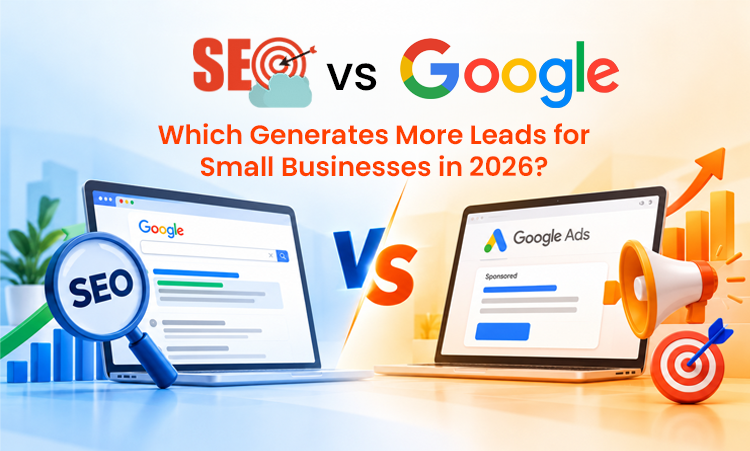
SEO vs Google Ads: Which Generates More Leads for Small Businesses in 2026?
SEO vs Google Ads: What's the Difference?
If you have a plumbing business for example. Someone nearby has a burst pipe and searches Google for a plumber. You want them to find you, obviously. But how do you get your business in front of them?
One option is Google Ads. Where you pay to show of your services to people who search for same, and this depends upon your campaign settings. Once your campaign is approved and running, people can start clicking through to your website.
The other option is SEO. You work on your website so it has a better chance of appearing in Google's unpaid search results. That might mean improving your service pages, sorting out technical problems or answering questions customers ask before hiring someone.
Neither is completely effortless. Ads need a budget and regular attention. SEO needs a combined approach of work towards your website and content. Still there is no 100% guarantee that a specific page will rank as per books.
Google's SEO Starter Guide is a useful place to understand the basics. But let's get to the question most business owners actually care about.
Which One Brings More Leads?
It depends on the business. A company that needs enquiries this week has a different problem from one trying to build a steady flow of customers over the next year.
Take a business that has just launched a new service. It has a decent website, someone ready to handle enquiries and a little money set aside for advertising. Google Ads could help it test whether people are searching for that service and whether the offer gets a response.
Now imagine an established business that already gets customers through referrals. It wants more people to find its services on Google. Working on SEO could make sense, especially if customers regularly search for what it offers.
Neither example means the channel will definitely work. An ad can attract the wrong people. A website can rank for searches that bring visitors who never enquire.
And that's the part worth paying attention to. Getting leads and getting customers aren't the same thing. If twenty people contact you but only one is a serious buyer, those twenty enquiries don't tell the whole story.
When Google Ads Makes Sense
Google Ads is worth considering when you don't have much time to wait.
Perhaps you're launching a service and want to see whether there's demand. Maybe you've got a seasonal offer that won't be relevant three months from now. Or perhaps people are already searching for exactly what you sell, and you want to reach them.
Ads can help in these situations, but don't assume that switching them on will fill your inbox.
Let's say you run an electrical repair service. You advertise for people looking for emergency electricians, but your campaign also attracts searches from people looking for electrician jobs or training courses. Some of your budget could go towards clicks that were never going to become customers.
The keywords matter. So does the page people land on. If the ad promises emergency repairs but the website makes visitors hunt for your phone number, you could lose enquiries you might otherwise have received.
Good Google Ads management involves checking what people search for, where the ads appear and what happens after someone clicks. It's not just a matter of setting a budget and leaving the campaign alone.
When SEO Is Worth the Investment
SEO makes more sense when you're prepared to build your website's visibility over time.
Think about a business that offers several services. If every service has its own useful page, people have a better chance of finding the relevant information when they search. A page that explains what you do, where you work and how customers can contact you is a reasonable place to start.
You don't necessarily need to publish a new blog every week. Sometimes the existing website needs attention first. Pages might be unclear, important services might not be explained properly, or visitors might struggle to find the information they need.
There's no fixed timeline for SEO. Google says changes can take anywhere from a few hours to several months to show up in search results. Some changes may not make a noticeable difference at all.
The long term SEO benefits can be useful when a business builds relevant visibility and keeps its website in good shape. But don't treat future traffic as a certainty, and don't assume that every visitor will become a lead.
If you're working with a limited budget, start with the pages most closely connected to the services you want to sell. There's little point in bringing more people to a page that doesn't explain what you offer.
SEO vs Google Ads: A Practical Comparison
Here's how the two compare when you're deciding where to put your money.
|
What to consider |
SEO |
Google Ads |
|
Getting started |
Usually takes time to build visibility |
Ads can start bringing traffic after approval |
|
Main costs |
Website work, content and ongoing optimisation |
Ad spend and campaign management |
|
Getting enquiries |
Depends on search visibility and the website |
Depends on targeting, budget and the website |
|
Longer-term value |
Organic visibility may continue without paying for each click |
Traffic usually depends on active campaigns |
|
Testing an offer |
Results can take time to assess |
Can help test keywords and offers sooner |
|
Main drawback |
Results aren't guaranteed and can take time |
You can spend money without getting useful leads |
Neither option wins every time. A paid click might bring a customer who spends thousands of rupees. Another might bring someone who leaves immediately. The same goes for organic visitors.
The useful comparison is what each channel costs your business and what you get back from it.
How Much Should a Small Business Spend?
There's no single budget that works for every small business in India. A local repair service, a B2B software company and a business selling expensive equipment won't have the same customer value or sales process.
So, rather than starting with a number someone recommends online, work backwards from what a customer is worth to you.
Imagine you spend ₹10,000 on Google Ads. Each click costs ₹20, giving you 500 clicks. If 4% of those visitors enquire, that's 20 leads.
Your cost per lead is ₹500.
Sounds reasonable? Maybe. But suppose only four of those twenty leads become customers. You've spent ₹2,500 in advertising for each new customer, before paying for campaign management or delivering the service.
These are hypothetical figures, not typical industry results. Your own numbers could look very different.
The point is that a cheap lead isn't necessarily a good lead. If someone enquires but never buys, the business still spent money to get that enquiry.
SEO has costs too. Content, technical fixes, website changes and ongoing management all take time or money. You don't pay for each organic click, but that doesn't mean the work behind those clicks is free.
If your budget is small, you might be better off choosing one channel to start with instead of spreading the money too thinly. And before spending more, check that your website works properly and someone can respond to enquiries promptly.
Are Your Leads Actually Making You Money?
A campaign can look successful on a screen and still disappoint the person paying for it.
Say your ads generate thirty enquiries. That's encouraging until you discover that half were outside your service area, several wanted something you don't offer, and only three became customers.
This is why cost per lead isn't the only number worth checking.
Look at how many enquiries are relevant, how many turn into sales and how much it costs to win each customer. If you can, compare those results with the profit the customers bring in. Sales revenue alone doesn't tell you whether the campaign was worthwhile.
You can also track calls, form submissions, bookings and purchases. Google's conversion measurement guide explains how to measure actions that matter to your business.
One thing to remember: an enquiry isn't always a sale straight away. A business selling a high-value service might need several conversations before a customer decides. Give those leads time to progress, and keep track of what actually happens.
Why You Might Not Be Getting Leads
Before switching from SEO to ads, or the other way around, take a look at the website.
Are the right people finding you? If your ads attract job seekers when you're trying to find customers, the targeting needs attention. If your content brings visitors who aren't looking for your service, the pages or search terms may need work.
Then look at the page itself. Can someone understand what you offer without reading through five paragraphs? Is your phone number easy to find? Does the page explain what happens when someone contacts you?
There's also the offer. More traffic won't help much if potential customers can't see why they should choose you.
And what happens after an enquiry arrives? If calls go unanswered or form submissions sit in an inbox for days, some potential customers will move on.
These aren't glamorous fixes, but they're worth checking before increasing the budget. Sometimes the problem isn't the amount of traffic. It's what happens when people arrive.
Can You Use SEO and Google Ads Together?
Of course. But you need to ask the correct question, is your business capable to support both rightfully?
Ads can clearly help you to test, things such as which searches are bringing relevant enquiries. SEO on other hand will build your visibility over long-term.
Overall, the ads will help you understand what customers might respond to, but it doesn't mean that the same things will work out on SEO as well.
If you have the budget and the people to manage both, combining them may make sense. If money is tight, there's no need to force a split just because both channels are available.
Start with the more pressing problem. Need enquiries now and have a suitable offer? Test paid search. Have time to build visibility and a website that needs improvement? SEO may deserve priority.
If you're not sure which approach fits your business, you can explore DT7 Agency's digital marketing consultant service or browse its services. The decision should come down to your business needs, not a package that promises to do everything.